Electric scooters are now among the most used personal means of transportation all over the world in 2025. They are the next generation of urban mobility since they are affordable, green, and can be easily serviced. Nevertheless, when assembling an electric scooter yourself or molding an old one, a battery is what can or can break the project. The battery defines the distance of your scooter, the speed of your scooter and the duration. Here we are going to discuss the most suitable batteries to use in DIY electric scooters in 2025, why they are a good choice, and which battery is good to use depending on your needs.
Knowing the Function of the Battery
Any electric scooter is powered by the battery. It contains the energy which drives the motor and determines the performance and the range. An excellent battery offers a compromise of performance, viability, and security. Making a scooter yourself, you have to choose the voltage and capacity of your battery to the voltage and capacity of your motor and controller. The voltage dictates the power output with the capacity dictating the duration of run time of the scooter before recharging.
By 2025, the technology of battery has developed to the point where you have a variety of choices, such as lithium-ion and lithium iron phosphate (Life PO 4 ) batteries. They all have their own advantages, as you prefer to be powerful, safe or long-lasting.

Types of DIY Electric Scooters Batteries
The most popular batteries used in electric scooters are the lithium-ion batteries. They are very light, small and can store large quantities of energy. The batteries have a highly developed chemistry which provides good performance and high-power delivery. When you are hoping to make a fast lightweight scooter with a long range, then a lithium-ion pack is the solution.
However, Life PO 4 batteries are becoming increasingly popular with DIYers in 2025. They are less hazardous, have a better cycle life and can undertake more charges discharge cycles without degrading promptly. They have slightly high weight, but they are very stable and provide thermal protection and suitable to be used heavily or in hot conditions. Life PO 4 is preferred to builders, who value safety and long-time performance.
The Founding of the Right Voltage and Capacity
It is very important to choose the right voltage and capacity to match your motor and controller. A majority of DIY scooters use 36V to 60 V batteries. Reduced voltages of 36V are appropriate to medium-speed scooters, and 48 V and 52 V packs to faster or hill-climbing designs.
Amp-hours of capacity are used to determine the number of hours which your scooter can be used. An example is that a 36V 10Ah battery can provide a range of about 25 to 30 kilometers, and a 48V 20Ah pack can have a range of up to 50 kilometers, depending on the rider’s weight and the terrain. High amp-hour ratings need to be emphasized by builders who want long-range performance, although this may add a little weight.
Battery Safety and Management
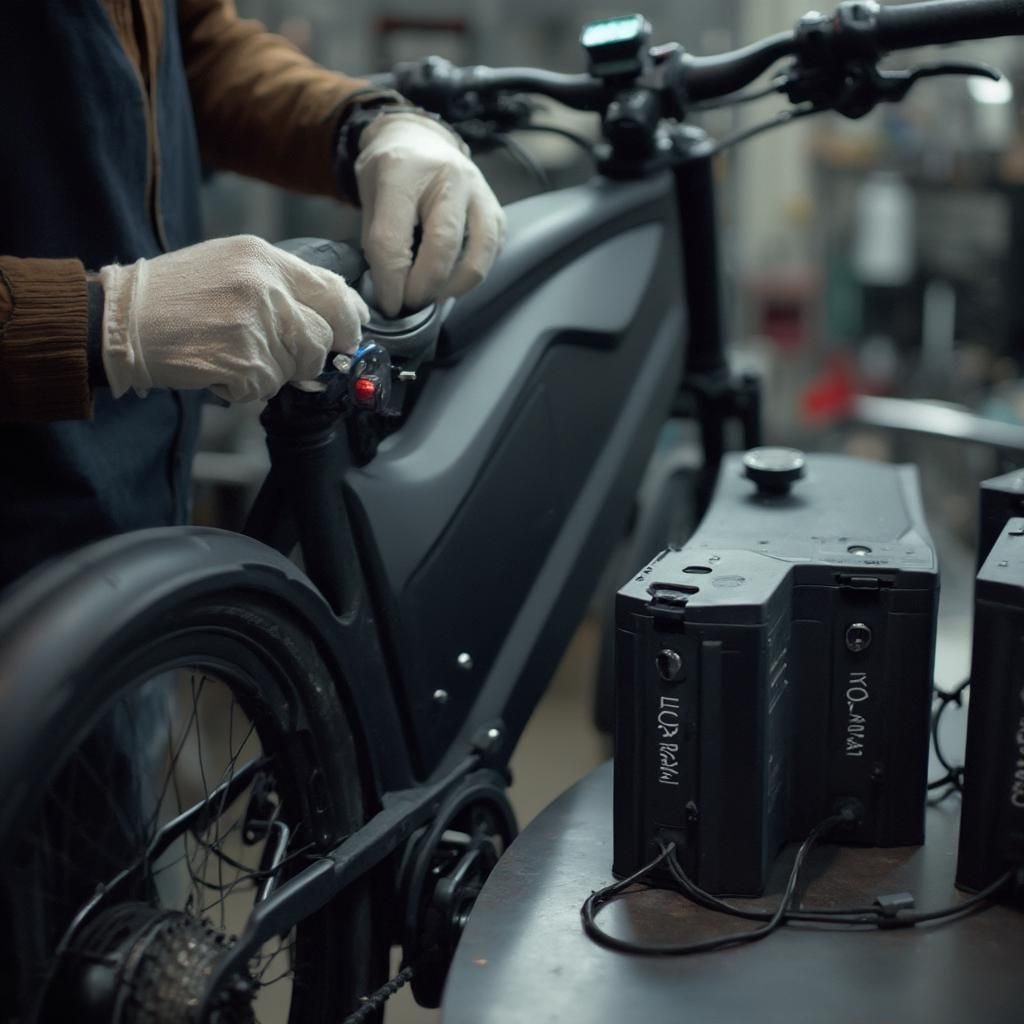
Each good quality battery pack has a Battery Management System, or BMS. This electronic element is needed to ensure that the battery is working safely as it measures the voltage, temperature, and current. It eliminates overcharging, deep discharge, or overheating all of which may harm the cells or be unsafe.
In choosing a battery that will be used in your DIY project, it is always a good idea to make sure that the pack has an efficient BMS. Correct wiring, fuse protection and heat-resistant insulation should also be used. It should have a solid casing that protects the battery against water and vibrations particularly when you are intending to ride on bumpy roads or when a little rain comes by.

The best battery to use in 2025 DIY projects
The battery models of some of the best options in 2025 are reliable, have high performance, and can be used with the popular scooter constructions.
The MANLY 48V 20Ah Lithium-ion Pack is a great compromise between speed and range and is available with mid- to high-powered scooters. It is small, strong and can be fitted under the scooter deck with ease.
The Smart Propel 48 V 30 Ah Lithium-ion Pack is highly recommended to riders who would like to cover a very long distance. It also provides user-impressive performance and consistent performance, which suits the builders with long route commutes daily.
The CWUU 36V 7.8Ah Pack is a low-priced and lightweight unit that budget builders would prefer when working with smaller or entry-level scooters. It is a reliable performance in the case of casual use even with limited capacity.
In the case of high safety and life cycle, people resort to the TYCORUN 76V 40Ah Life PO 4 Pack. This pack is heavier but with tremendous thermal stability and charge of cycle thousands, it is one of the most enduring to be used by hard-core riders.
The Samsung 21700-cell Lithium-ion Pack is still a high-end model when it comes to high-density energy builds. It is designed with an elegant cell design which offers more energy storage in a small size, which is ideal in the sleek scooter frame, which requires maximum power in minimal size.
Trade-Off between Weight and Performance
A balance between the weight of the battery and performance is one of the largest issues with DIY scooters building. The weight of higher capacity packs is also bound to increase and as such, handling and portability may be compromised. The question is up to builders whether to choose a lightweight scooter with a moderate range or a heavier variant that will allow the user to make long-range journeys.
A 48V 1520Ah system is a good compromise between performance and convenience in the majority of instances. It provides reasonable range without overloading the scooter. The battery should always be placed at the center of gravity of the scooter to ensure that it remains stable and in balance in case of rides.
Charging and Maintenance
Correct charging is an important factor in battery life. It is better not to charge the battery 100 percent each time but strive to achieve 80-90 percent to ensure a long battery life. Similarly, do not leave it to zero and then charge it. The battery should be kept in a cool and dry location and should never be kept in direct sunlight over a long period of time.
The routine maintenance involves inspection of the connectors, evaluation of the casing to detect any cracks, and terminal cleaning. It is also necessary to use a compatible charger because incompatible chargers may result in overheating or cell voltage imbalance. Under proper care, the contemporary lithium batteries can last a few years before any degradation is evident.
Cost and Environmental Performance
The manufacturing and disposal of batteries has some effects on the environment and thus the choice of sustainable alternatives is emerging as one of the key trends in 2025. In the case of Life PO 4 batteries, these are perceived to be more environmentally friendly because they have a longer lifespan and because of non-toxicity. A number of manufacturers currently have used battery recycling programs which lower the rate of environmental degradation.
Another significant factor is cost. Lithium-ion packs of high end can cost between 400 and 800 dollars depending on the voltage and capacity. This probably appears expensive at first, but with a critical battery that is built well, it can go thousands of kilometers, which can save money in the future as opposed to frequent replacements or fuel-powered options.
Why Life PO 4 became popular in 2025
The Life PO 4 batteries are starting to be the most reliable to DIY builders as they are safe, long lasting and have stable performance. They are resistant to overheating, have low voltage at heavy load, and cycle thousands of charge cycles without serious degradation. They are a little more expensive and slightly heavier, but their reliability is more than the disadvantage in the case of long-term use. Today, many constructors use them in regard to scooters that are meant to be used to commute or deliver to a destination.

Conclusion:
The performance and reliability of your DIY electric scooter are determined by the type of battery. There are many options in 2025 that have never been available before, including small lithium-ion packs or high-performance Life PO 4 systems designed to last. The trick here is to find a battery that fits your motor voltage, your hoped-range, and your budget.
Choose a 48 V or 52 V lithium-ion system in case you are in need of power and speed. To be safe and last longer, a Life PO 4 pack is recommended. Installation, correct mounting, and utilization of an effective BMS must always be ensured. Your home built scooter will not only be running, but it will be gliding safely, efficiently, and smoothly with the right battery and nothing less.
Do you want me to appendix this article with SEO optimized meta description and focus keywords (such as best scooter batteries 2025, DIY electric scooter battery and LiFePO4 vs lithium-ion)?