
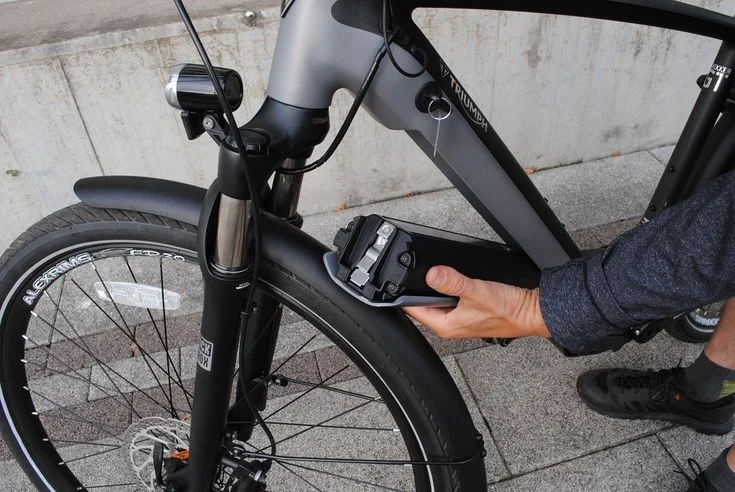
In today’s progressive transportation landscape, e-bikes have revolutionised the way we travel. These eco-friendly, cost-effective, and smart alternatives are gaining notoriety among all age groups. However, the genuine implementation of e-bikes remains unclear. Battery quality. The battery is the component that decides run speed and durability.
Choosing the off-base battery can lead to reduced execution, charging issues, and a shortened life span. Be that as it may, the right battery will make your ride smoother, more able, and longer-lasting. There are several alternatives accessible on the market, including lithium-ion, lead-acid, and nickel-based, but not all batteries are best for each e-bike. Do you know how to select the right battery that will maximise the execution of your e-bike?
Explanation of battery types
E-bike battery come in an assortment of sorts, with lithium-ion being the most well-known. These batteries are lightweight, long-lasting, and fast-charging. Lead-acid batteries are cheaper but heavier and less tough, so they are less commonly utilised on cutting-edge e-bikes. Nickel-based batteries are a bit rarer but offer a reliable control supply. Lithium-ion batteries have a cell administration framework that guards against overheating and cheating.
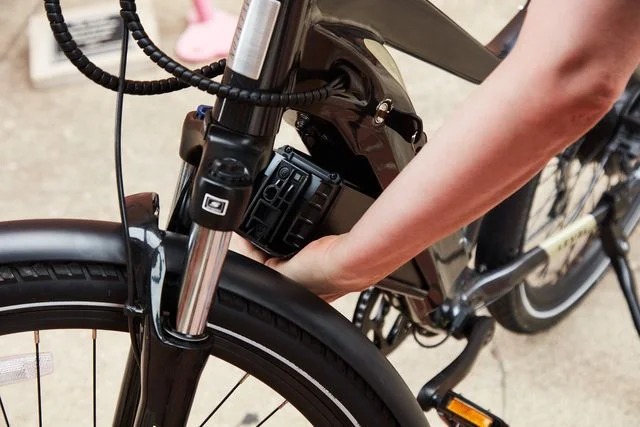
They keep up execution for 500-1000 charge cycles, making them an extraordinary choice for customary riders. The brand and chemistry are two factors to consider when selecting a battery since the appropriate type of battery determines the speed, height, and performance of your e-bike battery. Lithium-ion batteries are energy-efficient and a maintenance-free product in the long run.
Power and Voltage Guide
The voltage and control rating of a battery specifically influence the execution of an e-bike. Higher voltage batteries, such as 48V or 52V models, offer way better speed and range, whereas 36V batteries are best for ordinary commuting. The higher the voltage, the better the torque and climbing capacity. But higher voltage doesn’t continuously mean a crueller or better way to run. Battery capacity (OK) is, moreover, a vital figure.
For standard rides, 10Ah to 20Ah batteries are palatable, in spite of the fact that long-distance riders may require a capacity of 25Ah or more. Select control based on your riding plan and scene — an arranged voltage is best for city rides, and a high-voltage battery is best for unexpected landscapes. This adjustment keeps up both execution and battery life.
Range and capacity suggestions
The degree particularly depends on the battery capacity and motor capability. A 48V 15Ah battery often as possible offers a run of 40-60 miles, which is more than satisfactory for urban riders. If you coordinate on long trips or mountain rides, select a battery with a higher capacity. Higher capacity, moreover, increases charging time, but execution remains steady. Riders ought to select a battery according to their daily mileage and speed preferences.
Effective riding propensities, such as direct pedal help and controlled increasing speed, altogether extend progress. These days, battery with savvy BMS (battery management system) are available that upgrade energy distribution and guarantee a longer run. Choosing the right capacity is vital for riding comfort and reliability.
Best brands to trust
The quality of the battery depends on the reputation of the brand. Such well-known brands as Samsung, LG Chem, Panasonic, and Bosch are trusted names in the industry. Batteries from these companies are known for their high energy density, long life expectancy, and strong security benchmarks. Nonexclusive or obscure brands may appear cheap but are more prone to harm from overheating and brief circuits.
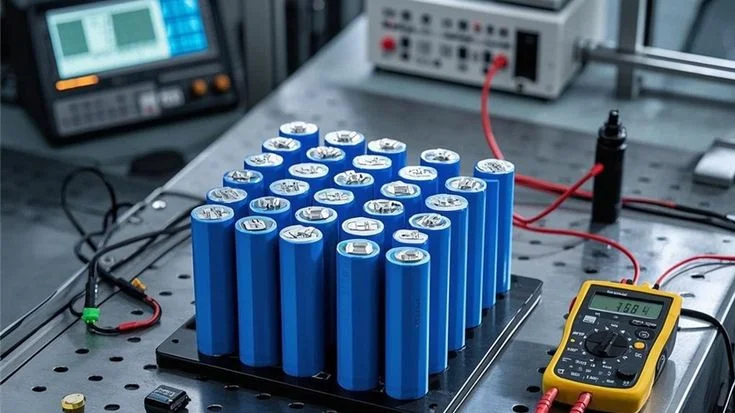
Branded batteries have warm administration frameworks that keep up ideal execution indeed in extreme temperature conditions. Confirmed brands come with guarantees that give long-term certainty. At whatever point you buy batteries, make sure beyond any doubt they are UL certified or CE approved. Yes, so that both security and execution are guaranteed. Premium brands are a bit more over the top, but their consistency and vigour make them a long-term venture.
Fast and safe charging
Charging is a key calculation in battery life. Quick charging may appear helpful, but not all battery is designed for it. Cheating can harm battery cells and abbreviate their life expectancy. That’s why it’s best to utilise savvy chargers that come with an auto-cut off included. Moderate, adjusted charging is prescribed for lithium-ion batteries. Charging ought to, in a perfect world, be at room temperature. Extraordinary warmth or cold can influence battery well-being. Dodge standard full releases – keep the battery between 20% and 80%. If the battery is detachable, indoor charging is the best alternative. High-quality chargers have surge protection that avoids coincidental voltage spikes. Secure charging propensities keep up both battery execution and reliability.
Design and weight factors
The plan and weight of the battery specifically influence the taking care of and comfort of an e-bike. Lightweight battery make riding smoother and simpler, particularly in urban areas. Fully designed batteries aesthetically fit perfectly into the bike frame and improve balance. Integrated frame batteries offer a modern look and better weight distribution, while external mount batteries are great for easy replacement.
Riders should choose a design based on their preferences portability or durability. Heavier batteries ordinarily offer more capacity but can be a little stiffer to handle. The quality of the materials is imperative. The aluminium casing is lightweight and heat-resistant. The combination of a shrewd plan and strides made in weight makes an e-bike both common sense and comfortable.
Take care of long battery life.
It is conceivable to extend the life of an e-bike battery with appropriate upkeep. Normal cleaning and security from cleaning are basic. Keep the battery absent from extreme heat, rain, or coordinated sunlight. Continuously utilise the manufacturer’s suggested charger when charging. Over-discharge and profound release can harm the cells, so do not charge the battery below 20%. If the bicycle is not being utilised for a long time, store the battery at 60% charge. Standard calibration of the BMS guarantees ideal execution. Week after week assessments and checking for free associations are, moreover, basic. Legitimate support can amplify the life of the battery by 30-40%. These propensities do not, as it were, guarantee security but do make the venture last longer.
Key points:
- Always keep the battery clean and dry.
- Use the recommended charger.
- Avoid discharges below 20%.
- This is ideal for storage at 60% charge.
- Protect from extraordinary warmth and cold
- Regular review and calibration are necessary.
Conclusion
In today’s cutting-edge transportation system, the e-bike battery is the most basic component that determines execution, expansion, and strength. Choosing the right battery is principal for each rider to guarantee a smooth, secure, and sensible ride. Lithium-ion battery are the best choice these days since they are lightweight, long-lasting, and fast-charging.
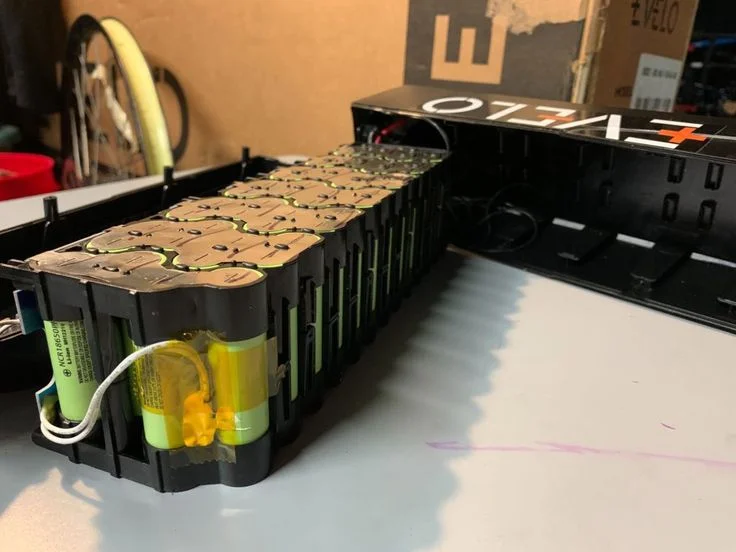
With legitimate charging propensities, support, and capacity, the battery life can effortlessly last 3-5 years. Branded battery like Panasonic, LG, and Bosch are more dependable and secure. Continuously utilise certified and trusted items. If you make after shrewd choice and provide appropriate support, your e-bike will give you both great execution and investment funds in the long run. In brief, choosing the right battery makes your e-bike proficient, ecologically neighbourly, and future-proof.